

By Jeremy Jefferson, Graduate Music Fellow
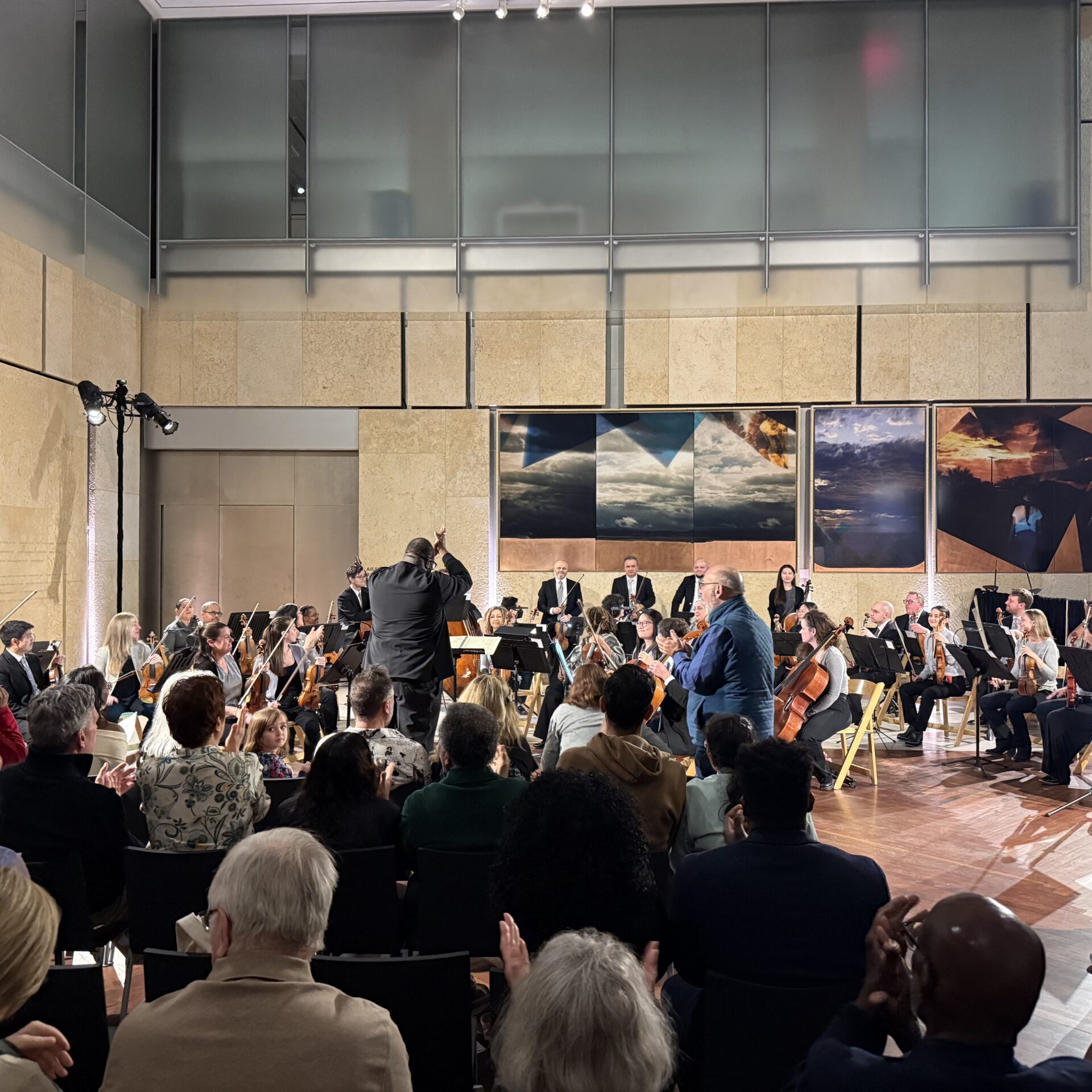
In my time at The Presser Foundation, I’ve found that access and opportunity are prevalent in most of our grantees’ performances. For this blog, I wanted to highlight Black Pearl Chamber Orchestra (BPCO) and how their performance at the Barnes Foundation shows off prestigious performers and an unforgettable experience for audience members.
BPCO and Founding Artistic Director Jeri Lynne Johnson’s mission is to transform the orchestra from the gatekeeper to an artistic product into a facilitator of the creative process for the entire community. BPCO illuminated this vision perfectly at this performance, featuring music by Julia Perry, Ajibola Rivers, and Ralph Vaughan Williams. This music highlights the prestige of BPCO through a wide variety of musical genres, and the ample attention given to the performers they collaborate with.
The night started off with “Stabat Mater” by Julia Perry. Perry was an African American composer who developed a spectacular resume over the course of her career. She earned her bachelor’s and master’s degree at Westminster Choir College, studying voice, piano, and composition. She continued her studies at the Berkshire Music Center in Tanglewood; and then studied at the Juilliard School of Music. Her education, her command of choral music, and her vast knowledge of melody helped build her career and led her to composing music around the world.
“Stabat Mater” was written in 1951, composed to the text of a 13th-century Latin hymn that describes Mary’s sorrow at the Crucifixion. This piece is heavy and dark much like walking alone in heavy, pouring rain. Perry uses chords to create textures that feel anxious and unnerving. The piece also demands quite a lot from an orchestra as there are a number of textures in the piece rather than any set melody. Those textures need to fit well with the mezzo-soprano soloist’s part.
The next piece of the night was Temple University graduate Ajibola Rivers’ Cello Suite no. 4 in A minor: I. Prelude which Rivers performed himself. The piece mirrors Bach’s Cello Suites in nature. They follow the same movements, but the dance suites take on inspiration from Latin and jazz music. Rivers also pulls from Native American portion of his lineage by his use of expressive motives.
Rivers’ style is “cool”–it feels like wind rushing over one’s skin, through their face and hair, with a clean and refreshing smell. Rivers is a fantastic cellist, and his deep expression and command of the instrument allows him to create colors and moods within this work; with his playing of this piece amplified even more by the fact that it’s his own composition.
During the intermission, BPCO hosted a small Q&A with “Stabat Mater” soloist Zoie Reams, Johnson, and Rivers. The interview focused on how the orchestra, soloists, and artists build their creative processes. Johnson talked about creating BPCO as a vessel for great artistry, and having artistry be the defining factor in selection for the orchestra, while Rivers and Reams remarked on their inspirations for the music they played. This intermission also allowed for audience members to explore The Barnes Foundation and their wonderful collection of art. The entire experience was thoughtfully curated and crafted from the start.
The final piece of the evening was “Fantasia on a Theme by Thomas Tallis” by Ralph Vaughan Williams. This piece is interesting because it features two individual string orchestras facing each other, and another string quartet in the back. While “Fantasia” doesn’t necessarily mean “Fantasy” in how we describe it today, the music is vast, larger than life, and expansive. This piece demonstrates how well Williams wrote for string instruments and strongly highlights their capabilities. Having BPCO perform the work with guest conductor Jaman Dunn-Danger helped build the fantasy world that Williams had in mind.
Throughout the performance, one could hear and observe a keen sense of artistry in this group that shines. It was demonstrated in the difficult passages of the Perry piece, that demands extreme execution; the mood of the Rivers work, and its exploration of the cello; and the grandeur of the Williams composition, and its color of the string family. BPCO curated a thoughtful and intentional concert allowing for audiences to experience a wide scope of music.