

By Miriam Davidson, Artistic Director
As part of The Presser Foundation’s drive to be more transparent and to amplify the work of its partners, it uses information from grant reports to highlight its grantees.
Each post will spotlight one partner, who has final say over the contents and structure of the post. In this way, the Foundation hopes to not only use information from grant reports (which often go unread and unused), but also to shine the light on many wonderful music organizations.
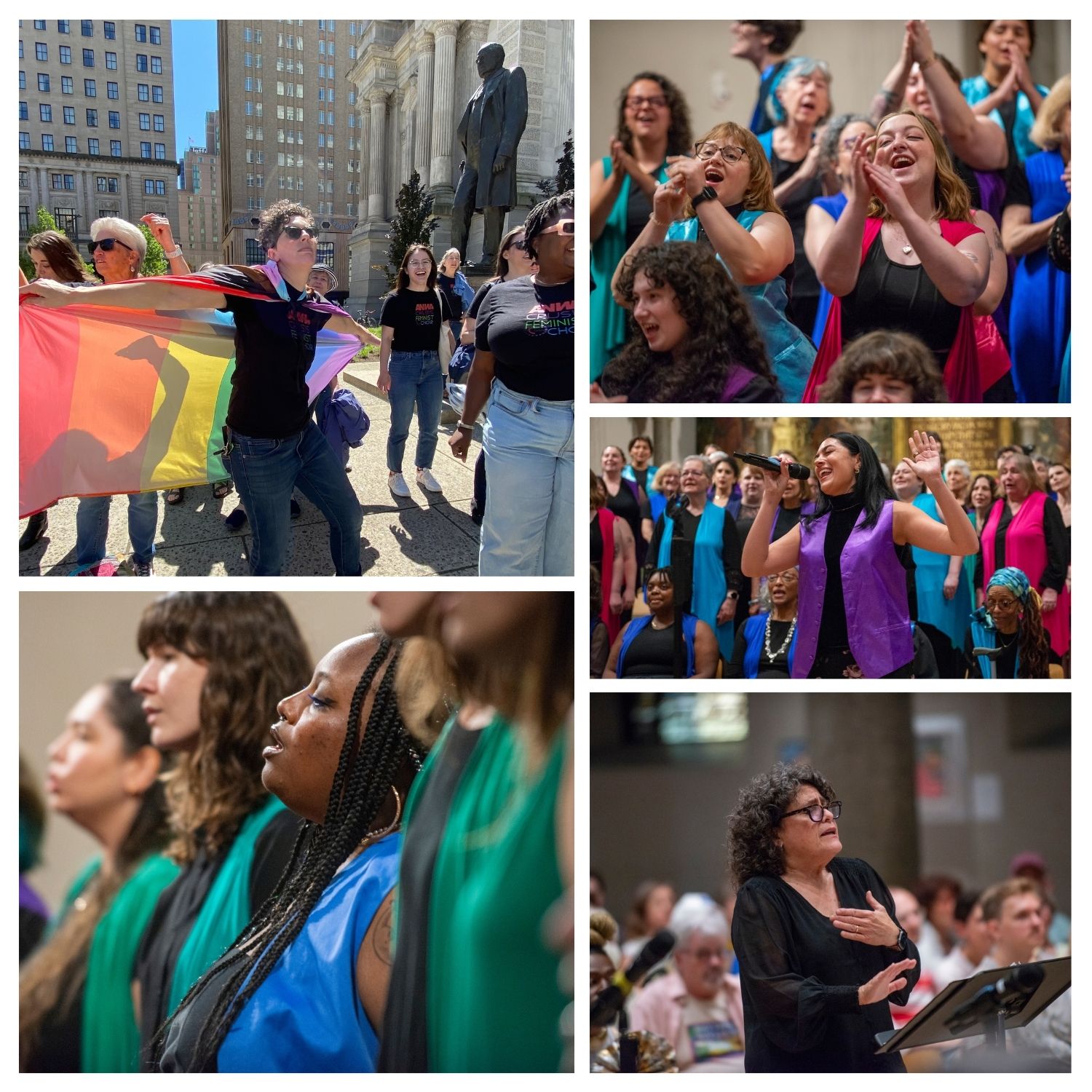
This post focuses on ANNA Crusis Feminist Choir, the longest-running feminist choir in the US – a Philadelphia institution known for its commitment to social justice and a repertoire that centers feminist, LGBTQ+, and underrepresented voices.
Background
Founded in 1975, ANNA Crusis Feminist Choir (ANNA) is the first and longest-running feminist choir in the United States. Our mission is simple but powerful: ANNA inspires social change and builds community through the power of music. Rooted in intersectional feminist values, ANNA brings together women, transgender, and non-binary singers who care about musical excellence, celebrate diversity, and show up for one another and for the broader struggle for justice and equity.
That means integrating artistic rigor with singing out on the issues that matter – peace, ending poverty, gender and racial equality, LGBTQ+ rights, and the kind of hope and empowerment that music can carry into a room. Our membership is diverse in race, age, gender, and socioeconomic background, and that diversity is part of what keeps us vital. After the expected dip during the pandemic, auditions have rebounded to pre-pandemic numbers – a good sign as we move into our next half-century.
Seasons of Music
2025, ANNA’s 50th anniversary year, was one of our most active yet, marked by a series of concerts that traced the choir’s history while pointing toward what comes next. Programming throughout the celebration moved between commissioned works and beloved pieces from ANNA’s past, gathering alumni, former artistic directors, and longtime supporters back into the fold alongside current members. Themes of resistance, solidarity, and social justice ran through the season, music connected to civil rights, feminist, and international liberation movements, linking our history to the causes we continue to champion.
The anniversary season closed with a final concert that honored where we’ve been while looking ahead to its next decade of music-making, blending a retrospective of ANNA favorites and past commissions with new work – a fitting bridge between fifty years of legacy and the future we are building.
In 2026, ANNA presented two concerts centering the voices and contributions of the Black community. The first featured a guest gospel choir, drawing on gospel and spiritual traditions to explore themes of survival, solidarity, and hope. The second highlighted music by Black women and LGBTQ+ composers, and featured a well-known Philadelphia poet whose commissioned work wove through the program alongside the choral music. Together they reflected ANNA’s commitment to seeking out music that tells stories beyond our own — educating ourselves and our audiences in the process. .
As part of documenting our legacy, ANNA maintains a full repertoire list on its website, cataloging the music the choir has performed over its history. Beyond serving as a record of ANNA’s own artistic journey, the list is a resource for the broader choral community: conductors and choirs can draw on it to discover feminist, social justice-oriented, and otherwise underperformed repertoire, extending ANNA’s mission beyond our own concerts.
Each year ANNA also collaborates with other Philadelphia choirs on city-wide Pride celebrations, including a free annual winter concert for the community. In 2024, a grant from PECO supported a rewarding, ongoing project exploring how ANNA can be more accessible to the deaf and hard-of-hearing community, with that work ongoing.
Belonging within ANNA
Anti-racism and racial equity are not peripheral to ANNA’s mission – they are central to it. In 2021, the choir developed a formal anti-racism statement and worked with the Of/By/For Change Network to turn that commitment into concrete planning and action. We set goals to increase the Black musicians and composers we hire, review our repertoire through an anti-racist lens, providing ongoing anti-racist education for our members, and building a safe, inclusive environment that supports the recruitment and retention of Black singers and singers of color. Those goals continue to shape our planning every year.
Today, ten of ANNA’s singers are Black, alongside others who identify with minority communities, and the choir actively encourages singers of color to step into leadership roles within the ensemble and on its board. Its eight-member board includes one person of color and three members who identify as part of underrepresented gender or sexual orientation groups. Choir leadership remains committed to ensuring members recognize the value of music beyond the dominant culture represented in its membership, and ANNA continues to reach out to diverse communities to bring in new singers, new board members, and new collaborators.
Impact
ANNA Crusis measures its impact through both outcomes and process. Our core goals are excellence in musical performance, amplifying a wide range of community voices, promoting social justice and diversity, and building genuine community for singers and volunteers. We track outcomes through audience and member surveys and monitor our process through concert attendance, marketing reach, community collaborations, and the number and diversity of our choir members.
In 2026, our objectives sharpened around a specific moment: participating meaningfully in Philadelphia’s celebration of America’s sesquicentennial through culturally relevant, community-rooted performances; amplifying the music, stories, and contributions of Black communities; deepening collaboration between choral music and poetry, and engaging audiences through inclusive, accessible programming.
ANNA is also looking structurally toward the future. Recently, our Board developed a new strategic plan, beginning with visioning exercises for both board members and singers. It was energizing to see how closely the two groups’ visions aligned: new collaborations with performing arts and values-aligned organizations, greater visibility, more variety and diversity in repertoire and venues, and a broader, more diverse membership and audience. That shared sense of direction is its own kind of momentum.