
By Jeremy Jefferson, Graduate Music Fellow
Hello! My name is Jeremy Jefferson, and I’m the 2025-26 Graduate Music Fellow at the Presser Foundation. I graduated with my master’s degree in Viola Performance from Lynn University this past spring, and I recently started studying for a Viola Performance certificate at Temple University’s Boyer College of Music and Dance. You can learn more about me and my interest in this Fellowship in this post.
I’m kicking off my blog post grantee spotlights with a trip to the Delaware Valley Opera Company, one of the newer grantees of the Foundation, which served as a wonderful “Welcome to Philadelphia” entry point for me.
Introduction to Opera
Before I share more about the Delaware Valley Opera Company (DVOC), I want to establish what opera actually is. Stemming from Italian, the word “opera” means, quite literally, “work.” This is related to what it takes for the musicians to practice and perform the opera—it is hard work! The amount of energy required for the singers to project their voice and sing (from memory—might I add) multiple hours’ worth of music is no small feat.
Even with the prodigious amounts of work required to perform it, opera has been a pillar of human entertainment for centuries. It is such a unique experience because of how the music is sung and performed. The performances offer a brief but powerful escape, allowing listeners to fully immerse themselves in the roles of heroes and heroines. Opera itself has nudged its way into the modern space, but it has not received the same spotlight as its more influential younger siblings, such as ballet and the symphony.
I believe wholeheartedly that opera as the immersive experience that it is should be explored much more on a local level. This is where DVOC comes into play.
Introduction to the Delaware Lyrics Opera Guild
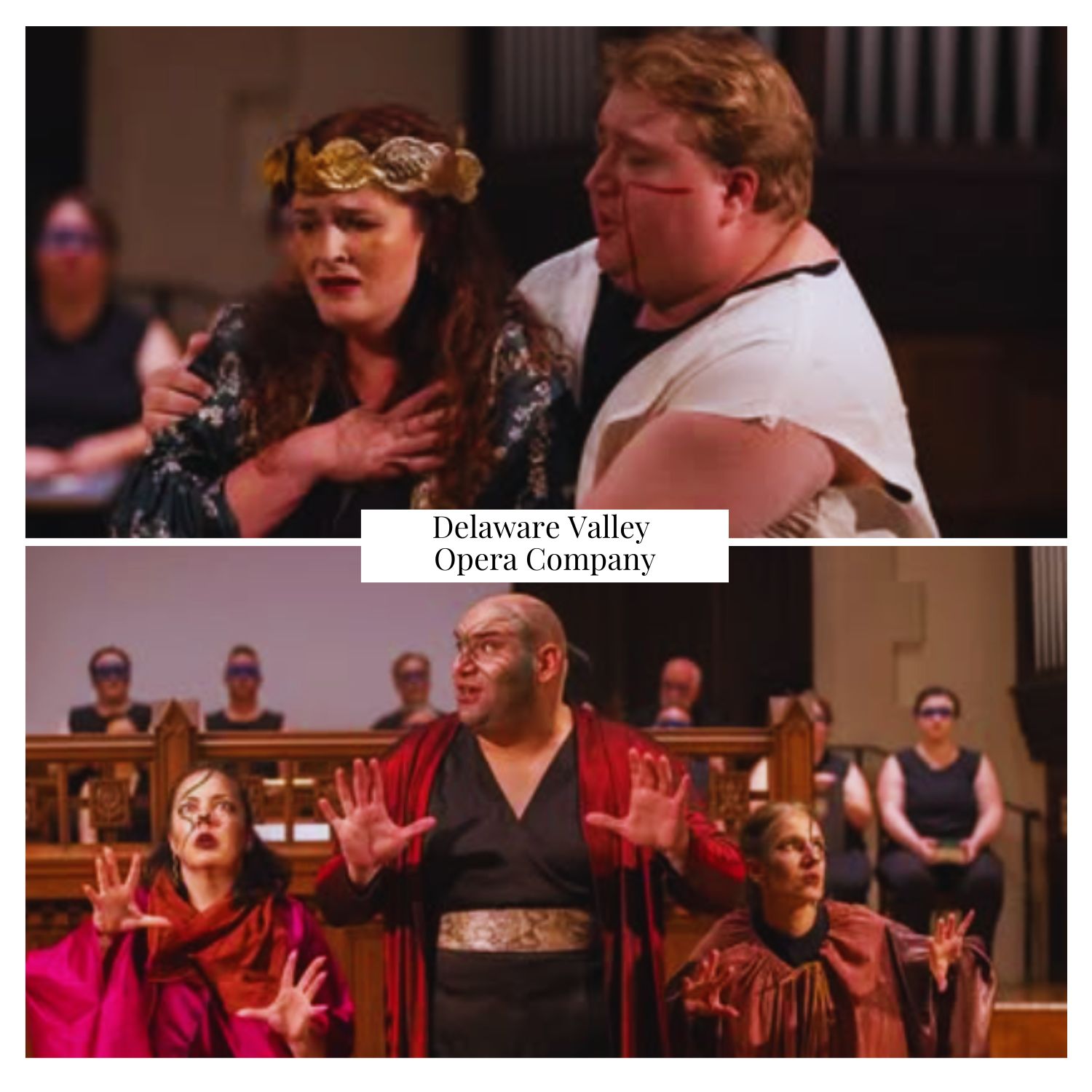
Originally established in 1979 as the “Delaware Valley Lyric Opera Guild,” DVOC is a Philadelphia-based volunteer opera company whose goal is to offer a stepping stone to accessible music for Delaware Valley residents. How do they do this? Through opera of course! DVOC’s mission is to present their own interpretation of mainstream, new, and innovative works of opera. Something that I appreciate about the DVOC is that they have a big emphasis on affordable, accessible, and engaging opera performances. All of that was evident in their performance of Henry Purcell’s Dido and Aeneas, which took place at The First Presbyterian Church in the Germantown neighborhood. It was easily accessible by public transportation and offered an opportunity for music outside of Center City.
Baroque Instruments and Historically Informed Performance Practices (HIPP)
Henry Purcell’s opera was written in the Baroque era. The Baroque era was a period of music from 1600 to around 1750 and it’s characterized by dramatic contrasts, ornamentation, and theatrics. A more famous example of this is Vivaldi’s Four Seasons. Purcell was no stranger to writing dramatic music.
If you haven’t seen Dido and Aeneas, you can learn about it here; in sum, it’s about the passionate love affair between Dido, Queen of Carthage, and the Trojan Prince Aeneas, who has landed in her kingdom while journeying to establish a new Troy. Their romance becomes complicated when divine forces intervene, creating a conflict between love and duty that drives the tragic conclusion.
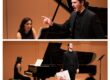
It cannot be understated that the DVOC was very particular with their interpretation of Dido and Aeneas, they provided a wonderful blend of modern choices alongside Historically Informed Performance Practices (HIPP), which entails performing music as if it were performed during the era that which it was written. How did they do this? Let’s start with the ensemble. In the Baroque era, the keyboardist was the conductor before the modern conductor with the baton and flashy gestures that we know today. This was because the keyboard held the basso continuo. The basso continuo holds the tempo, harmony, interpretation, and ornamentation; it’s an especially important role that the entire ensemble follows. In DVOC’s Dido and Aeneas, the keyboardist also served as the conductor–which is a wonderful example of HIPP.
The instrumentalists, which included a string quintet (two violins, a viola, a cello, and a double bass), all used baroque bows. When we think of modern string bows, we think of the concave curve that the wood has—but baroque bows are the opposite, and the wood is convex. Next time you see a baroque performance, try to see if you can notice if they are using baroque bows or not! It is not necessary to use baroque bows, but it helps to create a more realistic version of what Purcell was intending the sound to be—another example of HIPP.
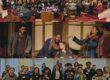
With that being said, DVOC also seamlessly integrated new styles of music in their interpretation. For example, I particularly enjoyed how they effortlessly changed sets with the chorus and their use of flags in the third act, which represented the rolling seas. The sorceress, my favorite character with their amazing voice and performance, also felt more modern with their attachment to their minions.
The Importance of Local Opera
DVOC Artistic Director Ryan Colbert shared the importance of local opera with the audience, and I couldn’t agree more. Being from suburban Georgia, there’s not a big emphasis on local opera, much less music. I find opera to be a unique escape from the woes of everyday life. It’s also a slice of history that can only be experienced at its best in person.
I love how affordable and accessible local opera is. In particular, the DVOC has an emphasis on how they reach their audiences–there’s always a way to reach these venues. I feel that DVOC expresses and follows their mission to the letter.
DVOC has put forth such a fantastic project, naysaying those who argue that local opera is not professional quality. This performance was quite a treat, the chorus was great, the singers were wonderful, and the orchestra was phenomenal.
Conclusion
There’s such a wonderful world of local music that exists in Philadelphia and that’s something that I feel is unique to Philadelphia itself. DVOC has shown how an organization can put together great and affordable music locally and easily accessible for all. When it comes to opera itself, Dido and Aeneas was the perfect choice for an opener—new and old opera-listeners alike have found a love for this opera (it’s no wonder it’s popular!). Thank you to DVOC for such a fantastic demonstration of what opera can be—I hope that more people come to experience the work that you have done!