
The Undergraduate Scholar Award was established by The Presser Foundation to celebrate undergraduate music students who have achieved a high level of musical and academic excellence, demonstrated leadership and service, and contributed to an inclusive community.
Each year, one student in their final year at hundreds of higher education institutions across the country is chosen as the recipient of the Award. As part of the Award, the student receives $3,000 to use as they wish and carries the honor of being known as a Presser Scholar for the rest of their life.
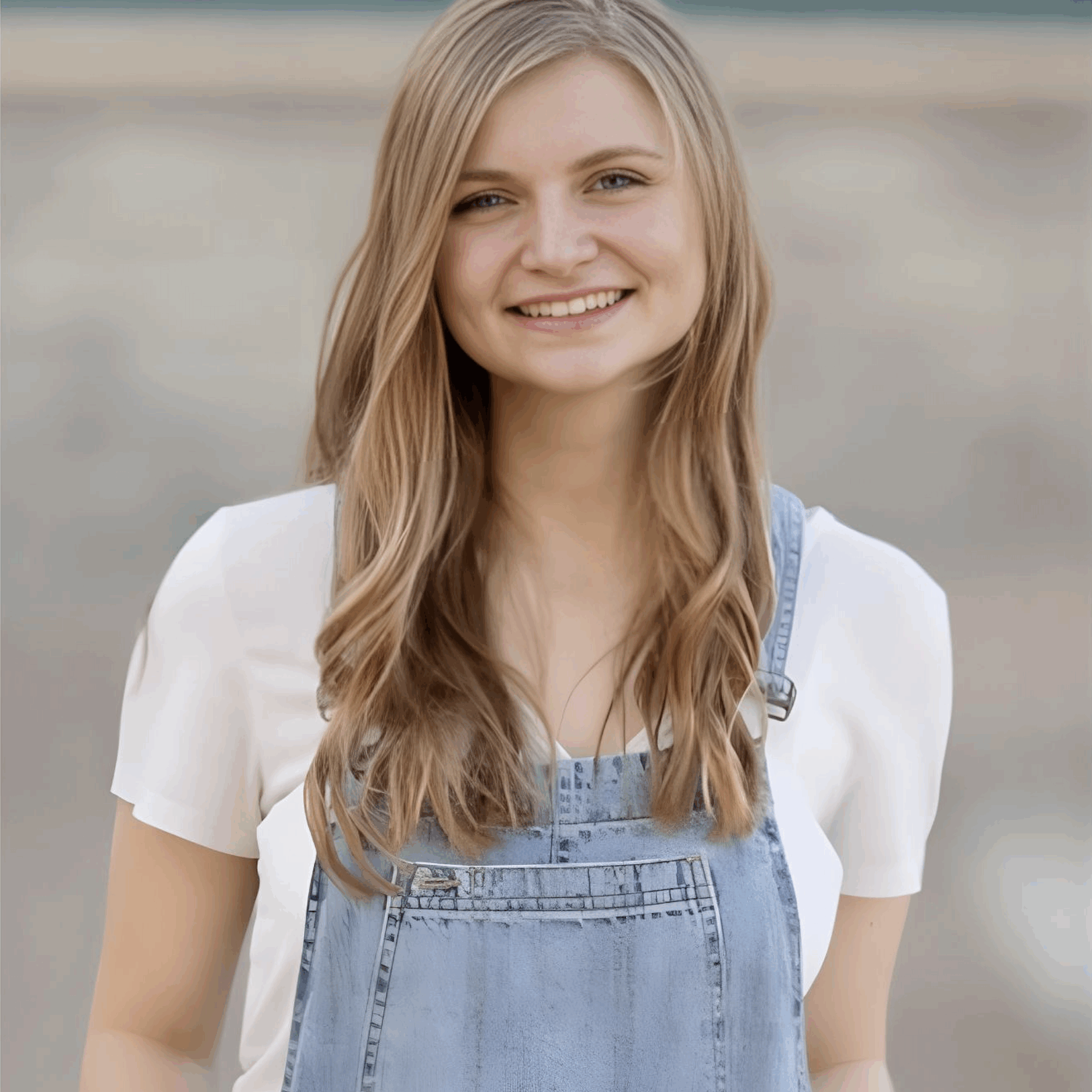
Olivia Bigler, a music therapy major, received the 2024-25 Undergraduate Scholar Award from Duquesne University. Learn more about her background, her passion for therapy, and how she is using the funds from the Award to further her career.
Background
Bigler first discovered music therapy when a local music therapist, and alumna from her high school, provided the opportunity to shadow her private practice when she was a high school junior.
While she had always wanted a career in music in some capacity, watching the alumna work with clients in various walks of life through the medium of music was inspiring.
“I realized that I wanted to use music to help people. When I entered the music therapy program at Duquesne, I had the privilege to go deeper into the nuances and specific music therapy techniques used for specific populations. The passion of my professors and peers in the music therapy program was contagious, and continues to motivate me to this day. I could not have picked a more competent and passionate faculty to begin my journey with.
“Music is a medium that extends across cultures, generations, and individual abilities. Music is intensely relational, and can connect people in beautiful ways. Music therapy has the distinct capability of using music as the catalyst for therapeutic change.”
Academic Excellence
Before graduating, Bigler was an honors music student at Duquesne, where she led discussions and sought to provide a compassionate yet challenging presence in learning environments. A voice major who participated in many performance courses, such as opera workshop, she presented with a musical dexterity and agility in clinical sessions.
She was selected to give an oral presentation for the Undergraduate Research Symposium: Folklore as an Epidemiological Response to COVID, and she completed a research paper as part of her cultural immersion in the Musica Roma Maymester: Transcultural Applications of Music Therapy Across the US and Italy.
The same curiosity and sensitivity that Bigler brought to academics was present in clinical music spaces, where her on-site clinical supervisors have consistently observed her capacity to musically meet clients in difficult emotional and psychological spaces through careful attunement and adjustment in her vocalizing and guitar/piano accompaniment.
Leadership
Her leadership and service were consistent throughout her time as a student. As Treasurer of the Music Therapy Student Association, Bigler prioritized fundraising to lower the cost of attending regional music therapy conferences, a historical barrier for students coming from lower socioeconomic backgrounds. As a member of the St. Vincent de Paul club, she participated in weekly outreach to the homeless population by providing food, water, and clothing. And as president of the Crossroads Christian Fellowship, she organized weekly fellowship and worship gatherings.
Contributing to an inclusive community
Bigler showed a commitment to inclusivity in Community Engaged Practicum, a challenging capstone course where students provide music therapy in community organizations without on-site supervision. This work blurs lines between therapist and client, creating a power sharing dynamic students struggle to conceptualize because it disrupts the expertise model frequently demonstrated in healthcare contexts.
Early on, Bigler landed on this tension – an insight most students don’t construct until midway through fall term – and modeled a sensitive and mature way to navigate it. In her reflections, she developed cultural humility and insights into how her personal values impact professional decision-making. She grappled with her assumptions about what music clients of certain generations would want to be part of their sessions with the reality of what those clients in fact wanted, and reflected on the values her ecology taught her about relationships young people have with music vs. older adults.
Impact of Award
“I hope to continue in the process of life-long learning as a music therapist. With this award, I plan to invest into further certifications for music therapy specialties such as the NICU (Neonatal ICU) certification and NMT (Neurologic Music Therapy) certification so that I can best equip myself to provide the highest level of care possible to my patients.
“This Award has been incredibly meaningful. For the first time in Duquesne’s history, the Presser award was granted to a music therapy major. I feel deeply humbled to accept this award and represent the amazing achievements of the music therapy program. Music Therapy is a growing, evidence-based field. I am honored to hopefully bring awareness to the field of music therapy and the hard work music therapy students are contributing to music programs across the country.”